
The Women Who Expanded the World of Arab Children’s Books
From Beirut to Cairo, Amman, Sharjah, Rabat and beyond, women publishers have helped give Arabic children’s books a new literary and visual presence.
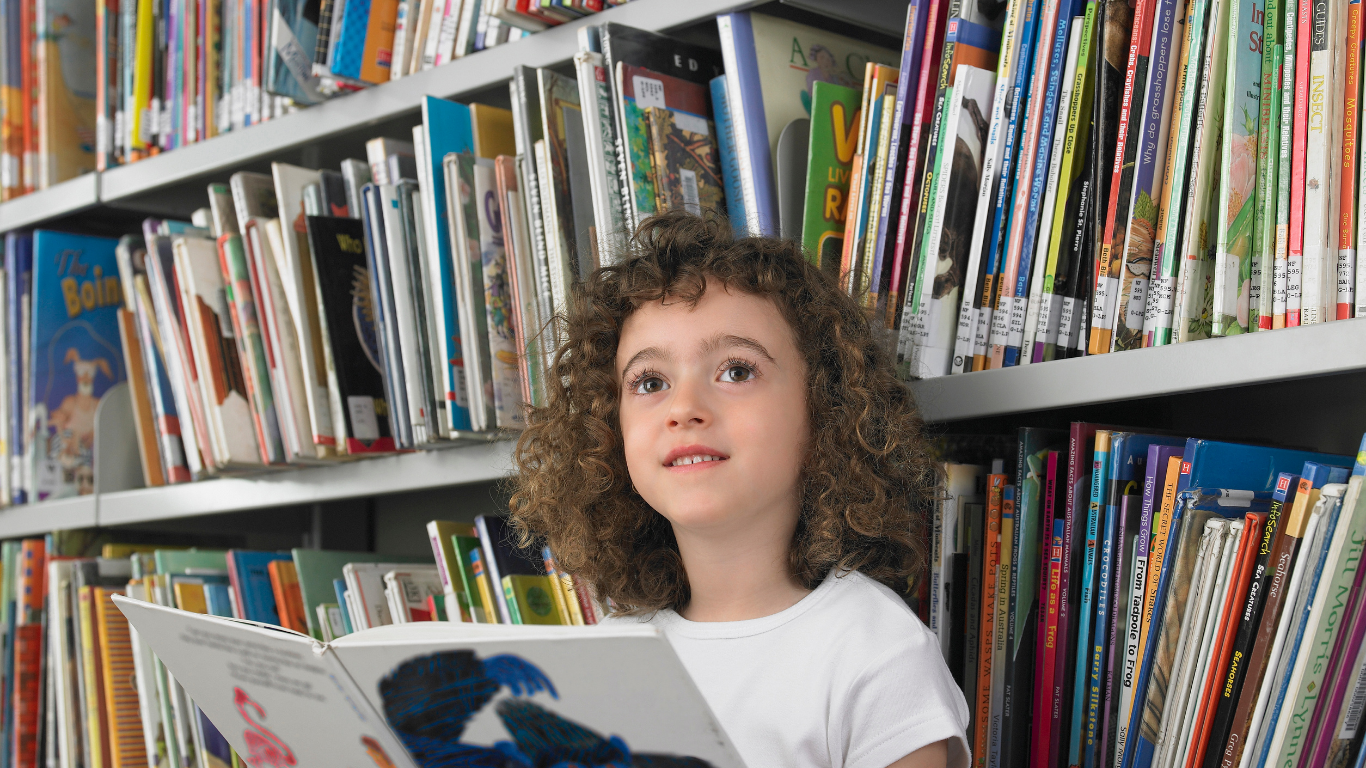
When we speak about the evolution of Arab children’s publishing, attention often goes to the books themselves: their illustrations, themes, visual language, or the new place given to the child’s imagination. Less visible, but just as important, is the work of the women publishers and founders who helped build this movement.
Over the past few decades, pioneering women publishers have done more than bring new books into print. Working within established houses or building independent structures from the ground up, they helped create the editorial, educational and institutional conditions in which Arabic children’s literature could develop and circulate. Their work opened paths for literary and artistic experimentation, education, access, inclusion, translation, reading communities and international circulation.
This article draws substantially on the research of Mathilde Chèvre, whose work on forty years of Arab children’s literature in Egypt, Syria and Lebanon remains essential for understanding this longer history. In Le poussin n’est pas un chien, Ms. Chèvre identifies the early 2000s as a new phase of editorial renewal, after a period of relative stagnation, when the field opened again to new forms, new voices and new ways of thinking about the child-reader. [1]
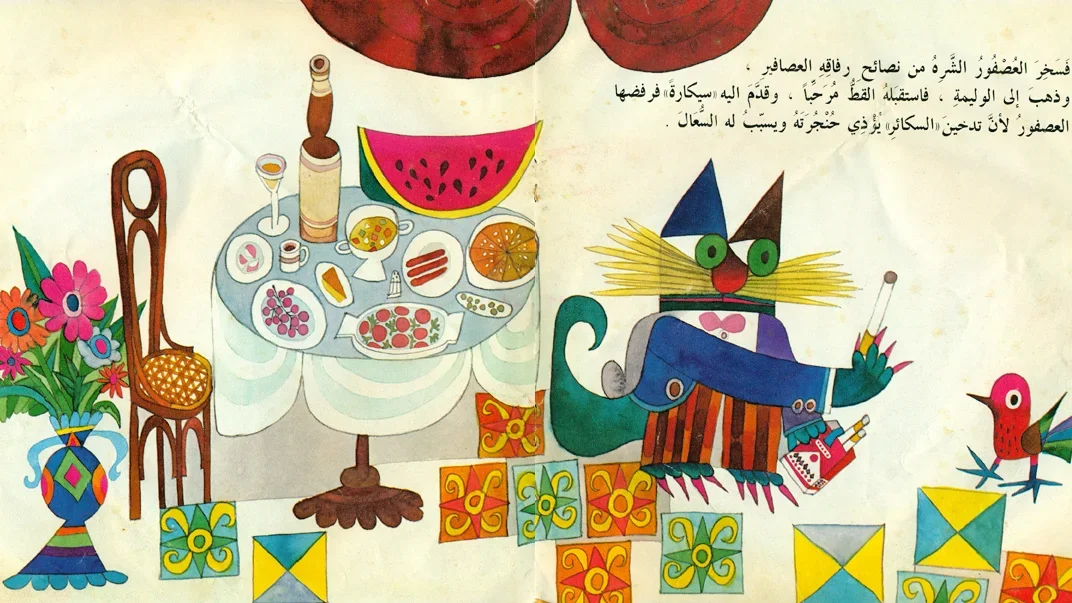
Illustration from Maʿdat al-Qiṭṭ (The Cat’s Belly), written by Zakaria Tamer and illustrated by Mohieddine Ellabbad, 1974. The image shows a bird refusing a cigarette, telling the cat that smoke is bad for its throat. Source: Flickr.
But Arab children’s publishing did not begin in the 2000s. Its roots are older, from early educational and cultural projects to the pan-Arab publishing movement of the 1970s, marked in particular by Dār al-Fatā al-ʿArabī. The more recent renewal belongs to this longer history, while marking a clear shift in how children’s books addressed their readers.
Editorial foundations
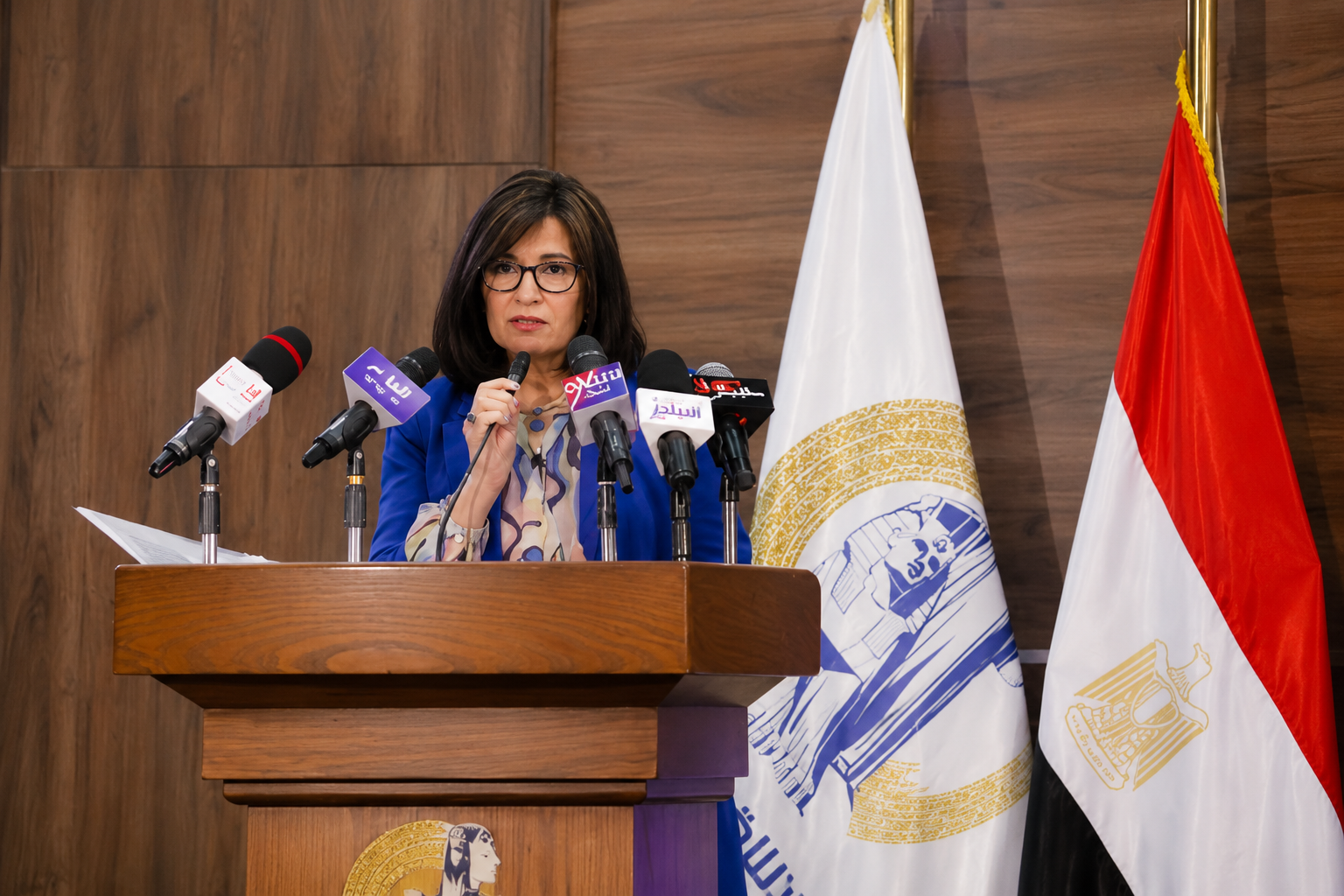
Amira Abu al-Majd, Managing Director of Dar El Shorouk, speaking at an event marking the Arabic edition of Daughters of the Nile: Egyptian Women Who Changed Their World, published by Dar El Shorouk. Photo: Ahmed Abdel Fattah and Dalia Mostafa / Shorouk News.
In Egypt, within the long-established publishing house Dār al-Shurūq, founded in 1968, Amira Abu al-Majd became one of the recognisable figures associated with children’s publishing. Shorouk identifies her both as a contributor to children’s titles and as a senior publishing figure. In public discussions, she often approaches children’s books through editing, image, language and cultural mediation, rather than through instruction alone. Around this work, Dār al-Shurūq continued building a children’s list where the child’s first contact with books was treated as a serious editorial question. [2]
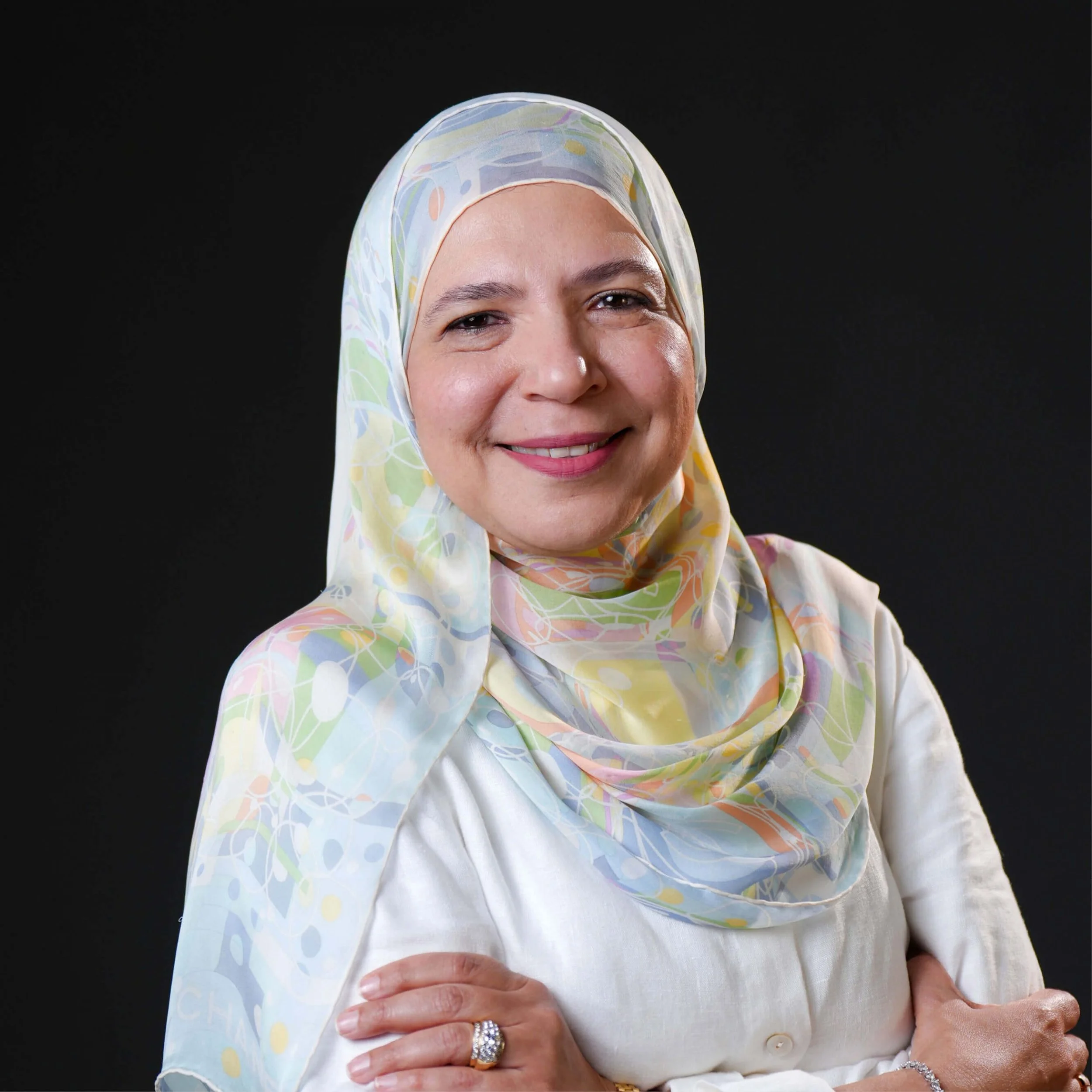
Dalia Ibrahim, CEO of Nahdet Misr Publishing House, pictured by Forbes Middle East as part of its 100 Most Powerful Businesswomen 2025 list. Her profile reflects the growing role of publishing leaders who connect books, education, digital learning and entrepreneurship within the Arab region.
At Nahdet Misr, Dalia Ibrahim shows how children’s publishing in the Arab region also evolved through institutional and educational infrastructure. Under her leadership, the house expanded its work in educational publishing, children’s books, digital learning and EdTech, linking publishing to broader questions of access, skills and learning. Her example makes clear that the renewal of Arabic children’s literature was not only aesthetic or literary. It also required professional structures, investment, cross-sector partnerships and new ways of reaching readers. [3]
In Lebanon, this renewal took several forms, from inclusion and children’s rights to oral culture, independent publishing and reading communities.
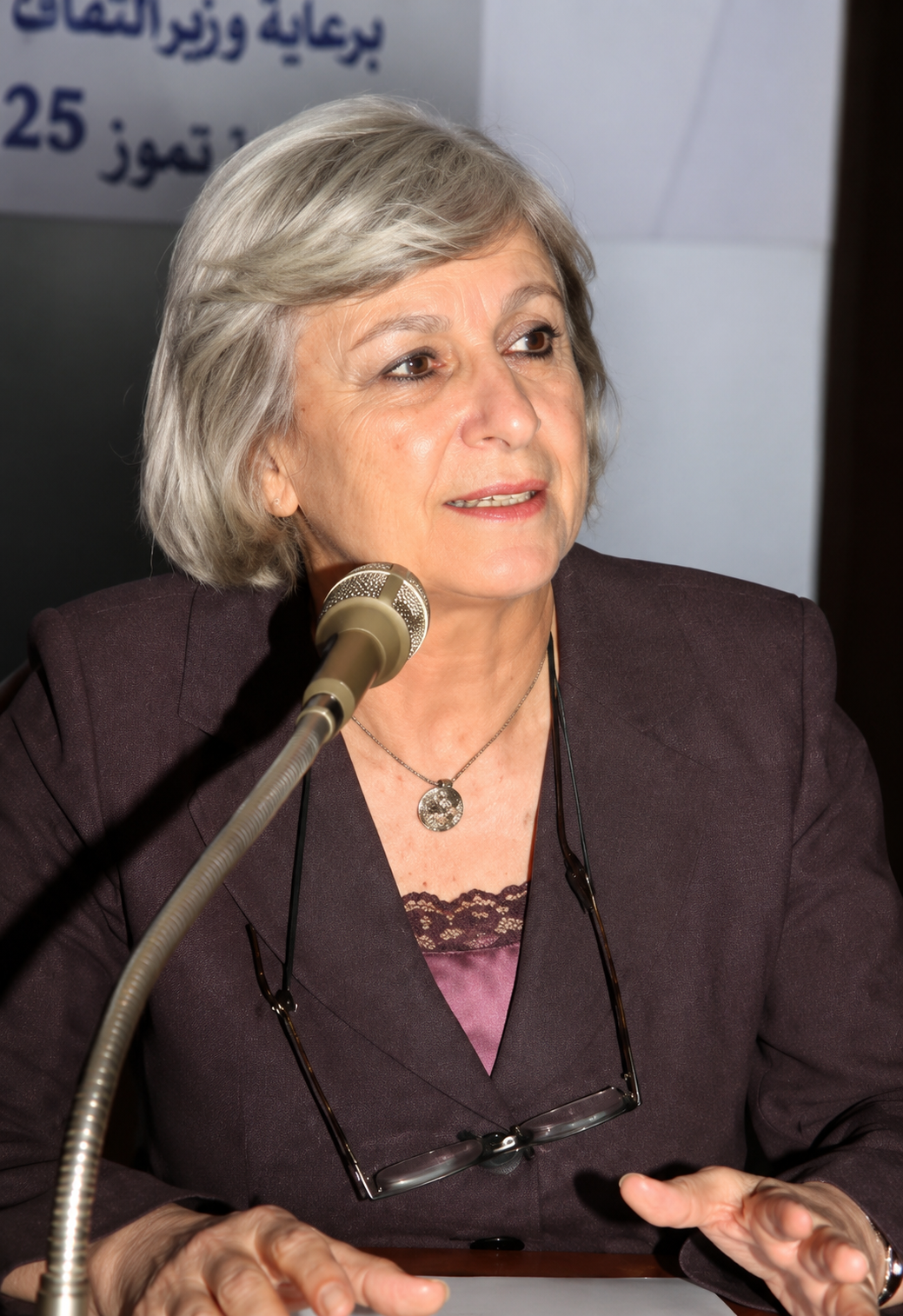
Najla Nusayr Bashour, Lebanese educator, author and founder of Tala Educational Aids Foundation, known for her work in early childhood education, children’s literature, educational tools and children’s rights. Photo source: Al Tibrah.
Najla Nusayr Bashour, who founded and has directed Tala Establishment for Educational Materials since 1985, brought disability, difference and children’s rights into the field with unusual clarity. Her books My Friend and My Brother Is Different received UNESCO’s Prize for Children’s Literature in the Service of Tolerance in 2001. This recognition matters because it placed inclusion within children’s literature itself, rather than treating it as a side issue. [4]
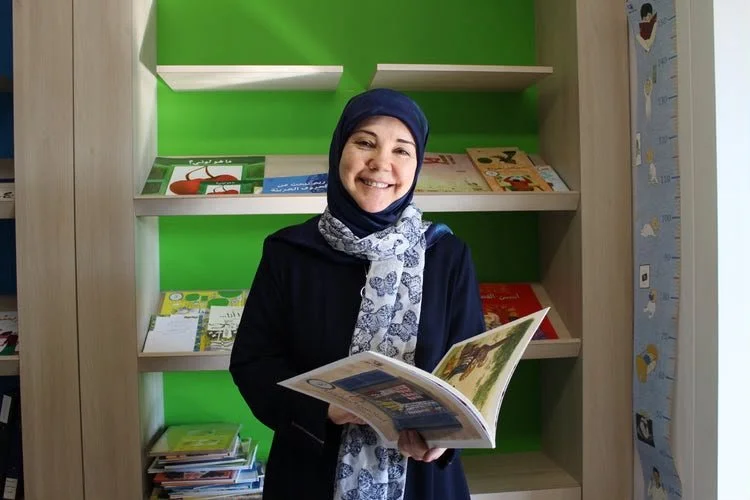
Nabiha Mheidli, Lebanese writer, editor and founder of Dār al-Hadā’iq, with the cover of Al-Bayt Laysa Laḥman wa-Ḥīṭān (A Home Is More Than Flesh and Walls), written by Mheidli and illustrated by Walid Taher. The author of more than 100 children’s stories, she has played a central role in shaping Arabic children’s books, magazines and visual narratives.
No account of this editorial history would be complete without Nabiha Mheidli, founder of Dār al-Hadā’iq and one of the longstanding figures of Arabic children’s publishing. As both publisher and author, her work contributed to shaping a wide catalogue of children’s books across generations of readers. She helped strengthen the place of children’s literature within Arabic publishing culture. [5]
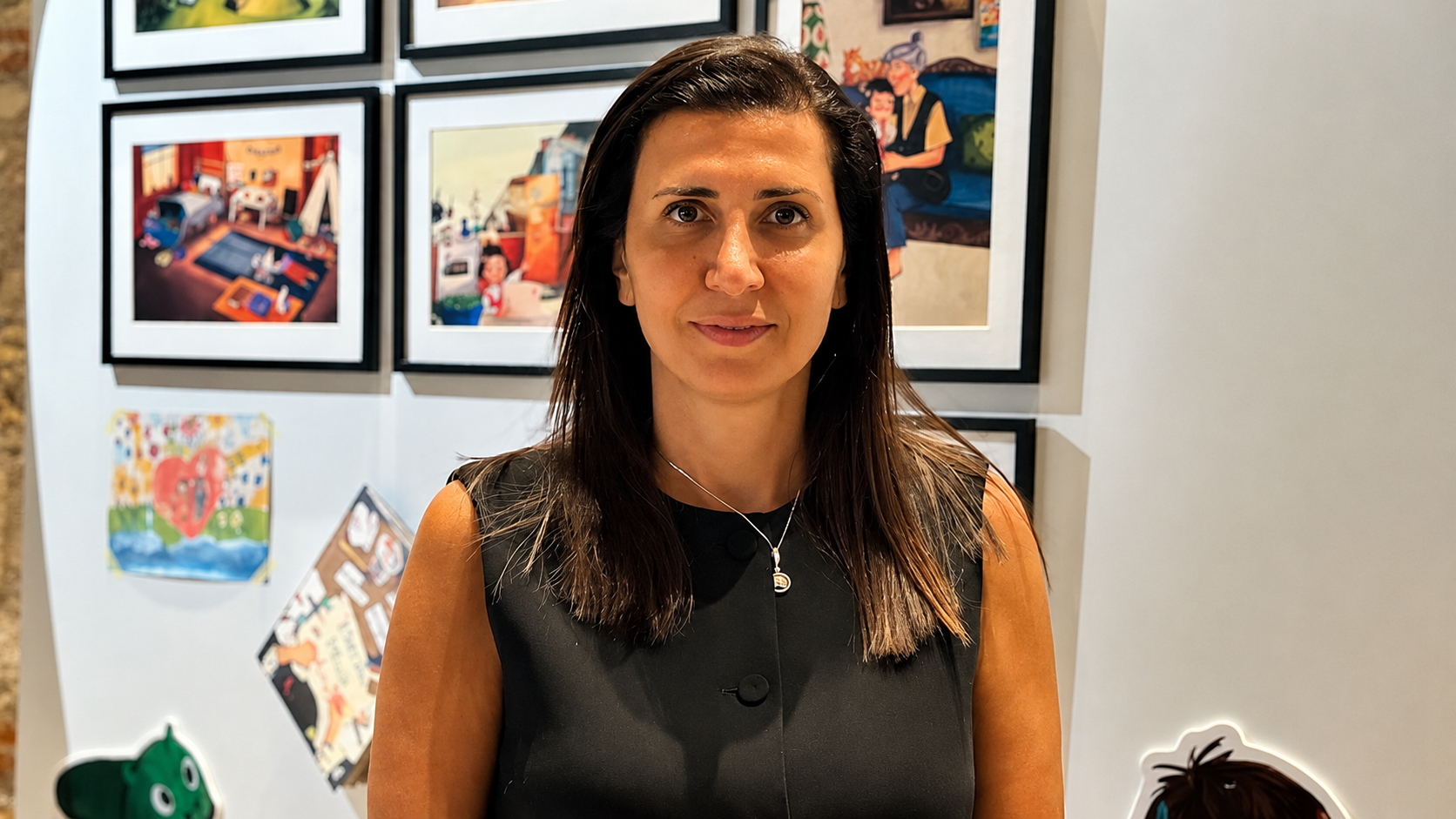
Dr. Shereen Kreidieh, the first Arab woman elected Chair of the Jury for the Hans Christian Andersen Award, pictured at Rami Library in Istanbul during the Children’s Books Biennale 2026. Photo: Ahmet Esad Şani / Anadolu Agency.
This professional development of Arabic children’s publishing also took shape through the work of Dr. Shereen Kreidieh. At Dār Asala, founded in Lebanon in 1998, she created and developed the children’s literature division, building an important catalogue while discovering and supporting authors and illustrators from across the Arab region.
Her work continues beyond publishing through teaching, research and her involvement with LBBY (Lebanese Board on Books for Young People). This wider engagement brought her international recognition: elected in 2024, she became the first Arab woman to chair the Hans Christian Andersen Award Jury, for the 2026 edition. [6]
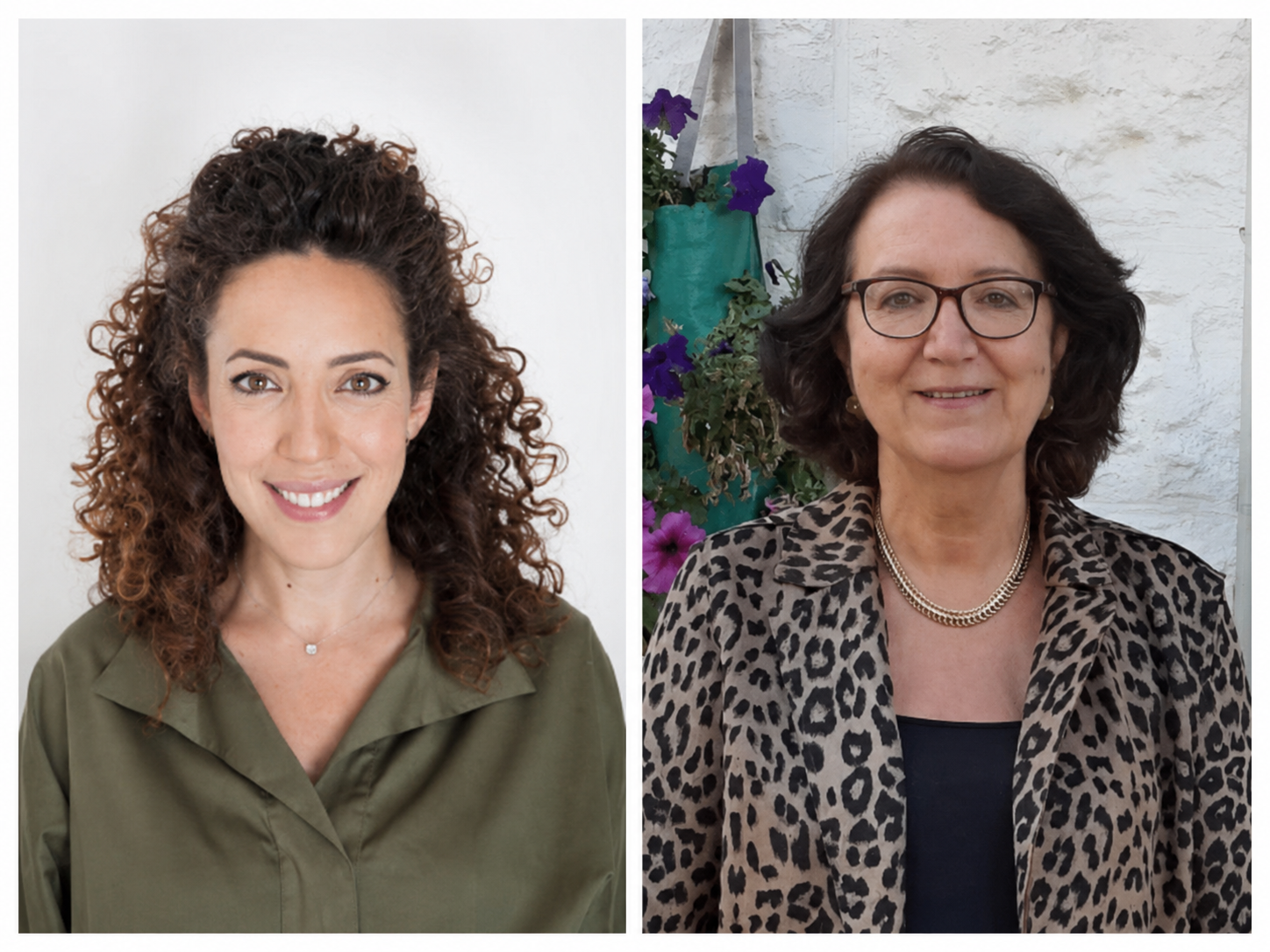
At Al Salwa Publishing House, Taghreed Najjar and Salwa Shakhshir embody a mother–daughter continuity: from four decades of storytelling across picture books, middle-grade and young adult fiction to the editorial work that helped bring original Arabic books for young readers into wider circulation.
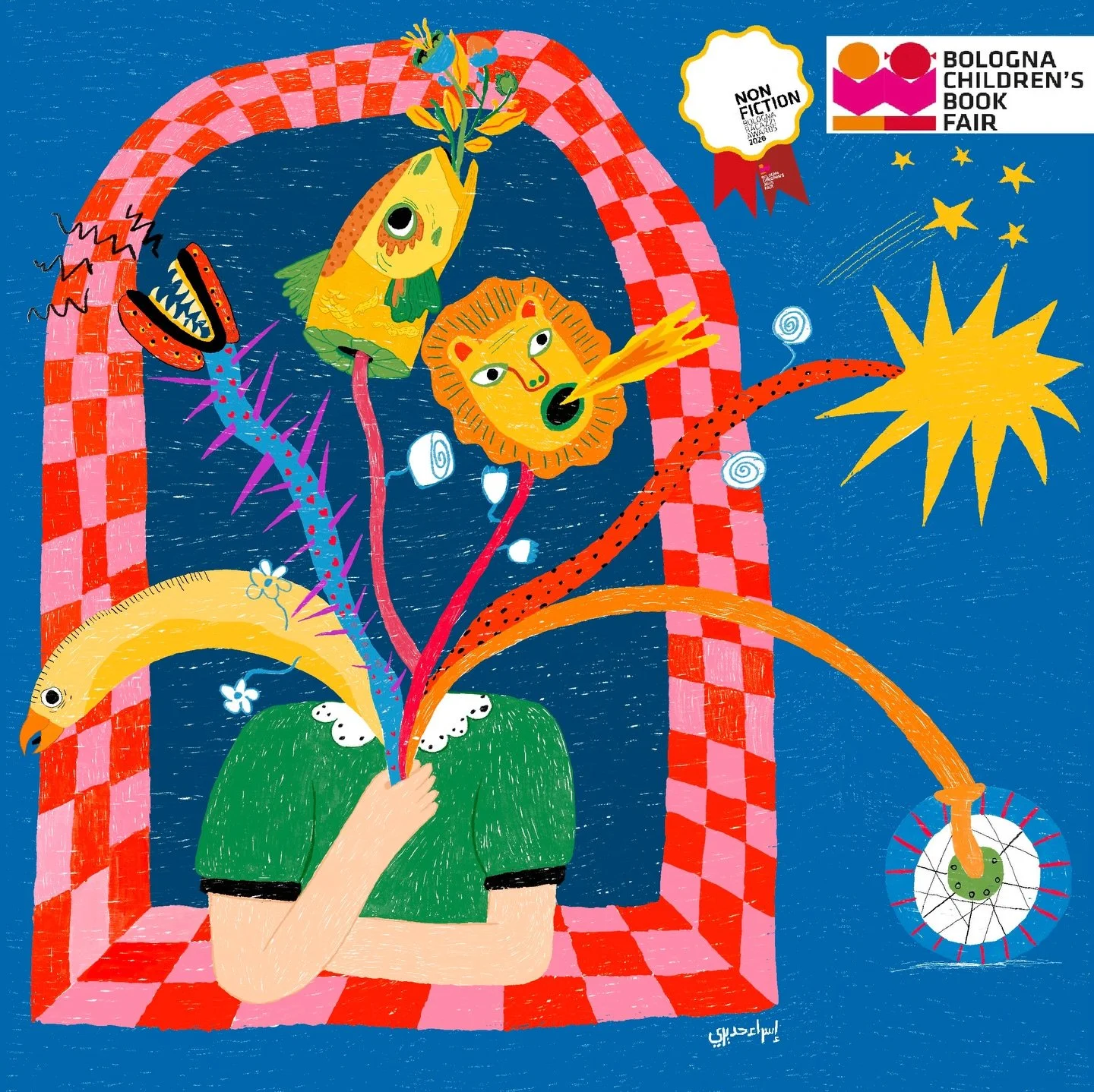
Esraa Hedery. Book: Who Am I?. Dar Al Salwa Publishers (2025). Author: Qais Alhinti
Al Salwa Publishing offers another example of a strong independent model in Arabic children’s and young adult publishing. Founded in Amman in 1996 by writer and publisher Taghreed Najjar and now led by Salwa Shakhshir, the house has built a catalogue rooted in storytelling, illustration and a close understanding of young readers. Its 2026 BolognaRagazzi Award in the Non-Fiction category for Who Am I? brought international recognition to this long-term editorial commitment. [7]
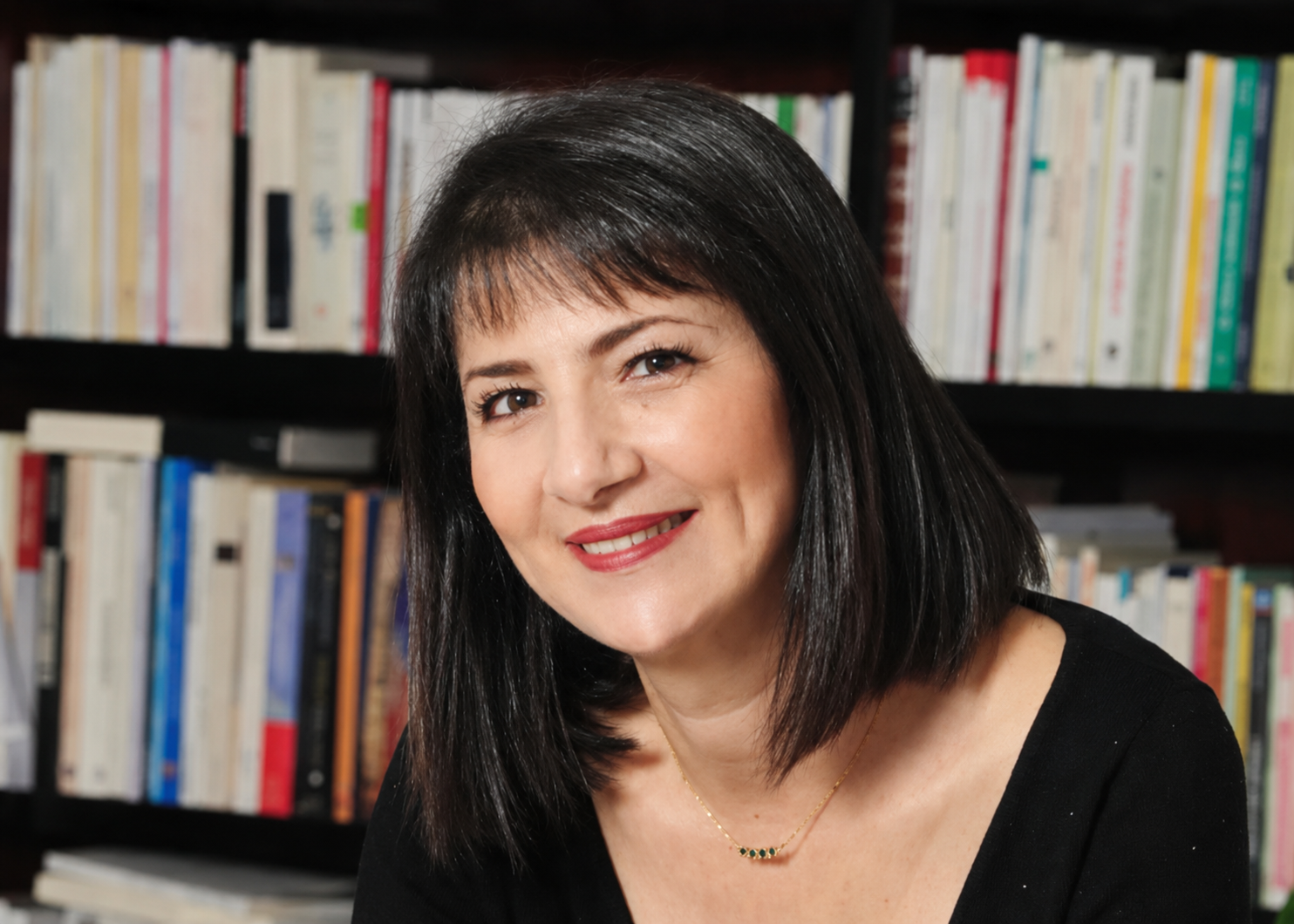
Founder of Yomad, one of the pioneering Moroccan publishing houses dedicated to children’s books
Away from the long-established publishing centres of Lebanon and Egypt, Nadia Essalmi opened an important path for children’s publishing in the Maghreb. When she founded Yomad in 1998, Morocco had very few books in which children could recognise their own language, culture, landscapes and everyday life.
Often described as the first Moroccan publishing house dedicated to children’s literature, Yomad developed a catalogue rooted in local realities while remaining open to Arab and francophone readers. In doing so, it helped give Moroccan children’s books a stronger place within the wider regional publishing landscape. [8]
New Voices, New Forms, Wider Reach
From the mid-2000s onward, a newer generation of publishers, founders and cultural practitioners pushed the field in different directions and across a wider regional map.
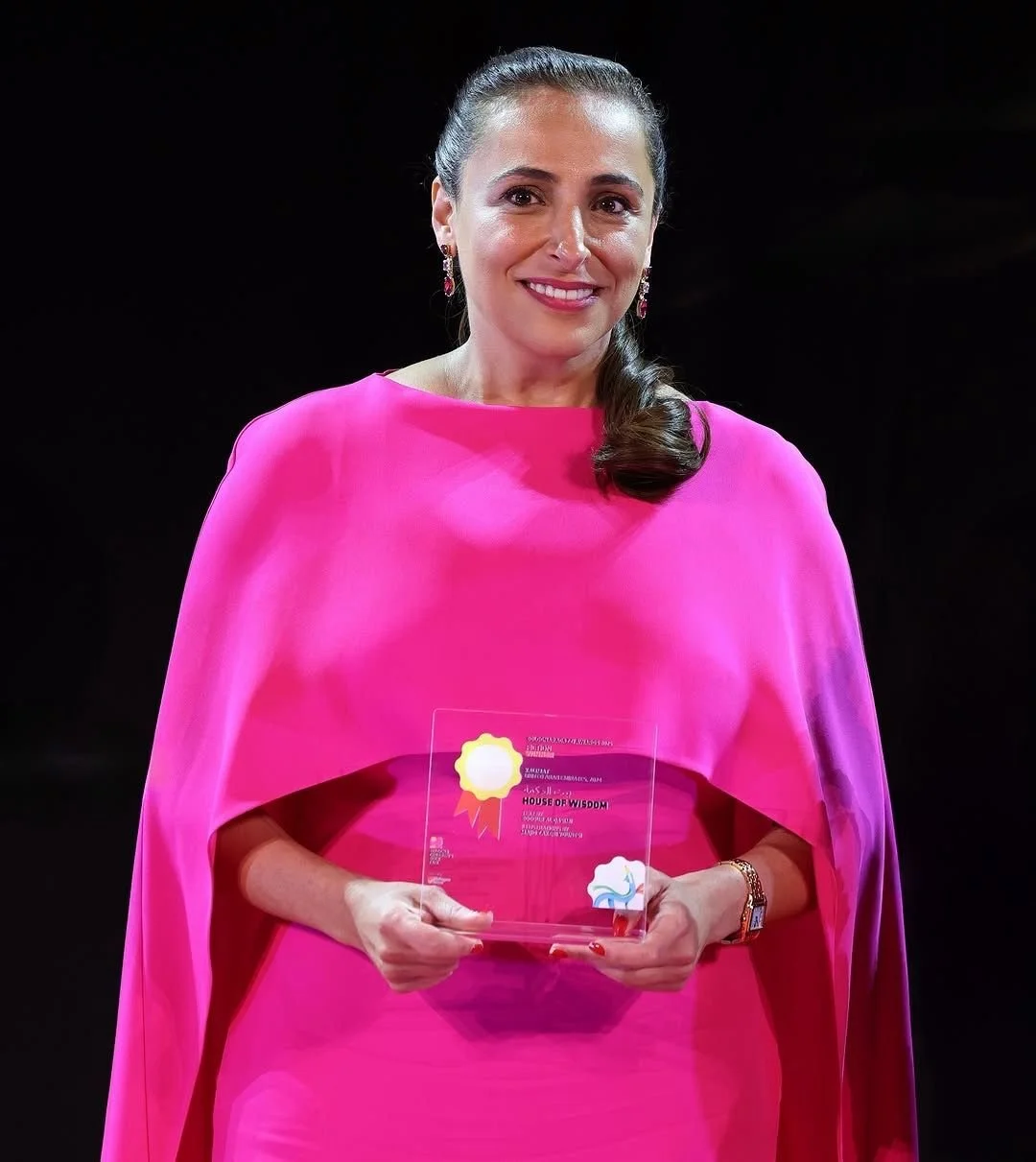
H.H. Sheikha Bodour bint Sultan Al Qasimi, Emirati publisher and cultural leader, founder of Kalimat Group and Kalimat Foundation. She served as President of the International Publishers Association from 2021 to 2022, becoming the first Arab woman to hold the position, and has also led major cultural, educational and publishing institutions in Sharjah, including the Sharjah Book Authority since 2023.
In the Gulf, Kalimat marked more than a change of scale. Founded in Sharjah in 2007 by H.H. Sheikha Bodour bint Sultan Al Qasimi, it helped give original Arabic children’s books stronger editorial support, more opportunities for translation and a wider international presence.
What makes Bodour Al Qasimi’s contribution especially important is the wider structure she built around the book. She founded the Emirates Publishers Association and helped establish the UAE Board on Books for Young People. Through the International Award for Arabic Children’s Literature, writers, illustrators and publishers have gained recognition, training and new opportunities for their work to travel.
Her initiatives have also addressed who can access books. Through Kalimat Foundation, Pledge a Library brings Arabic books to displaced and disadvantaged children, while Ara produces accessible books for blind and visually impaired readers. PublisHer created another space, this time for women working across the publishing industry.
Her presidency of the International Publishers Association from 2021 to 2022, as its first Arab woman president, carried these questions into a wider global conversation. Taken together, these projects contributed to Sharjah’s emergence as an important publishing centre and connected Arabic children’s books to a broader network of creators, readers, publishers, libraries, prizes and international partners. [9]
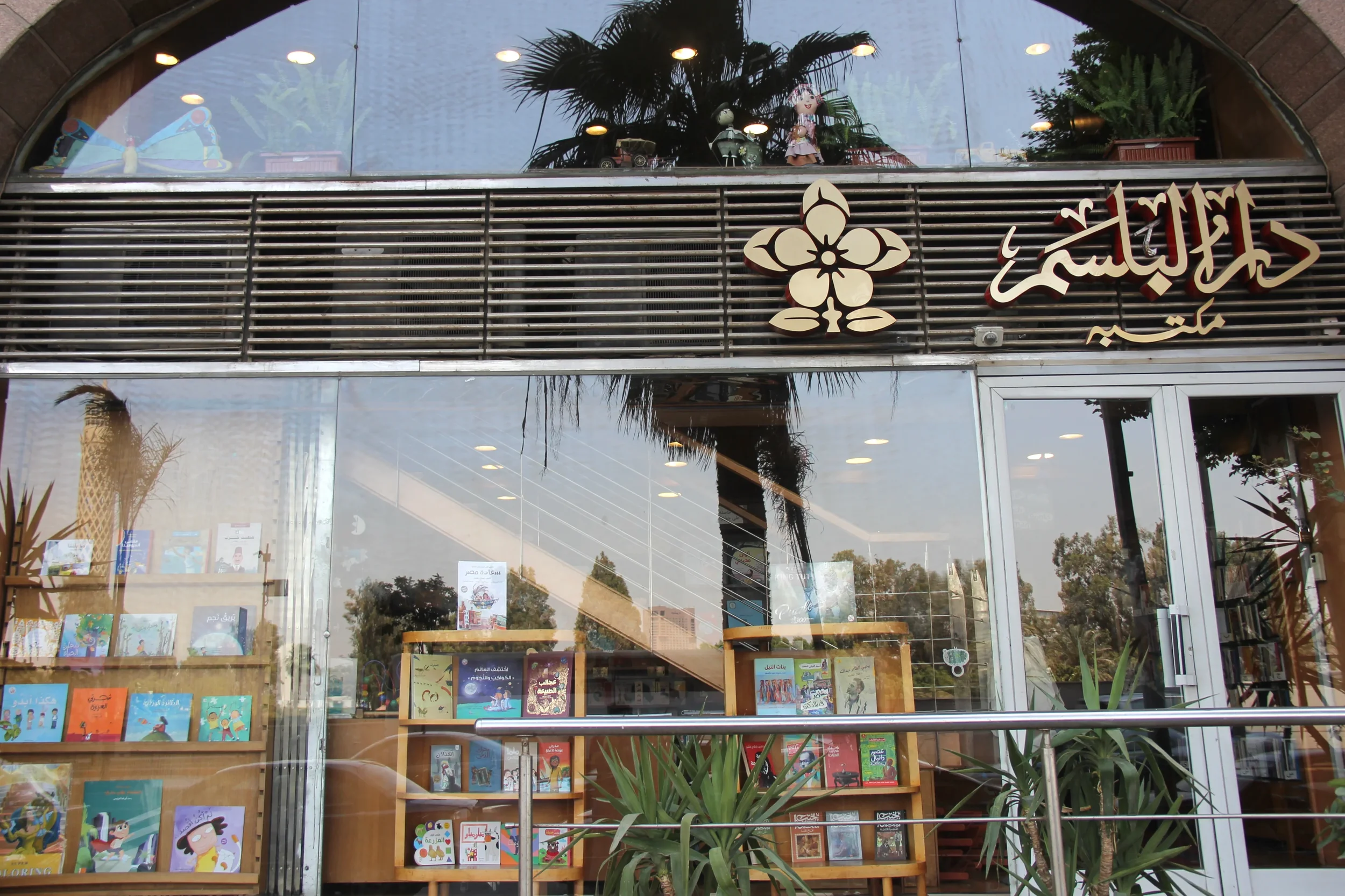
Al-Balsam Publishing House and Bookstore in Egypt. The largest bookstore for Arabic children’s books in Egypt.
Egypt, meanwhile, has retained its place as one of the major centres of publishing in the Arab world. Its large readership, long literary history, established publishing houses and central position in Arabic cultural production continue to give the country an important role in the regional book industry. Within this landscape, Dār al-Balsam, founded in 2005 by Balsam Saad, developed a children’s catalogue attentive to writing, visual quality and translation, both into and from Arabic. Its work also shows how questions of accessibility entered the field. An Arabic-Braille adaptation of The Very Hungry Caterpillar was singled out by IBBY Europe as a rare example of tactile children’s publishing in Arabic. Dār al-Balsam therefore belongs to a broader Egyptian publishing tradition while opening space for formats and readers who have often remained underserved. [10]
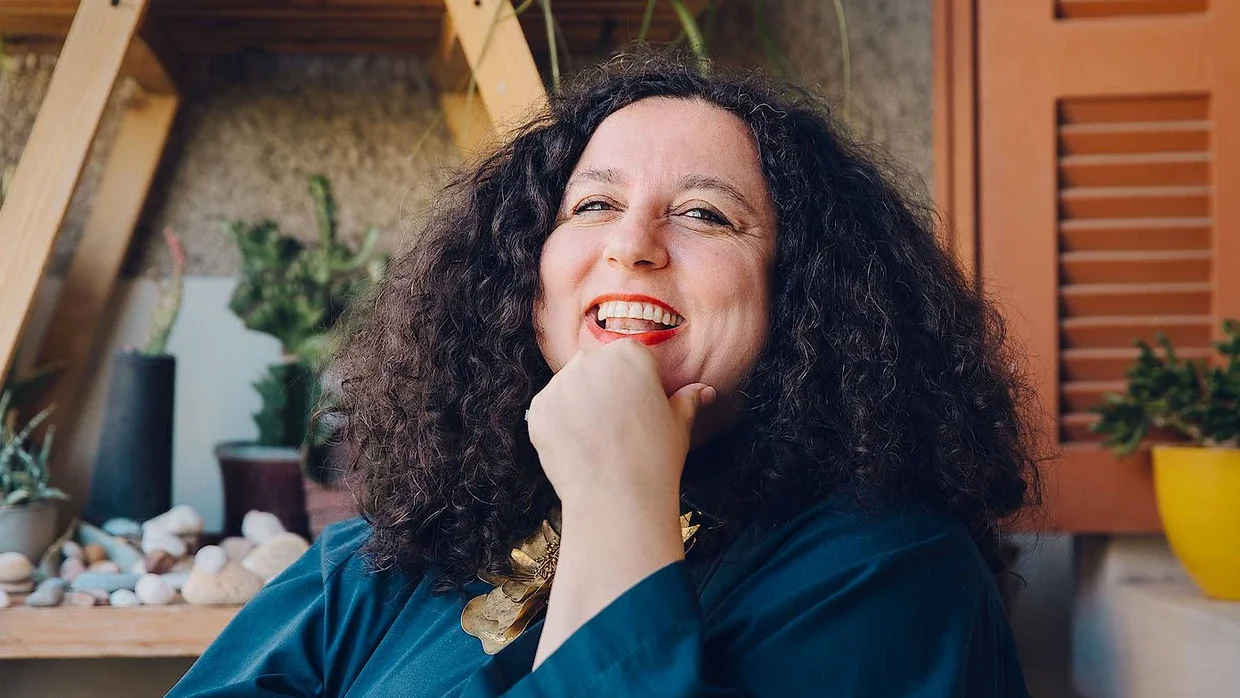
Nadine Touma, Lebanese publisher and founder of Dar Onboz, photographed in Beirut. Through Dar Onboz, she has helped expand the possibilities of Arabic children’s books as visual, literary and material objects. Photo: Maria Klenner / Frankfurter Allgemeine Zeitung.
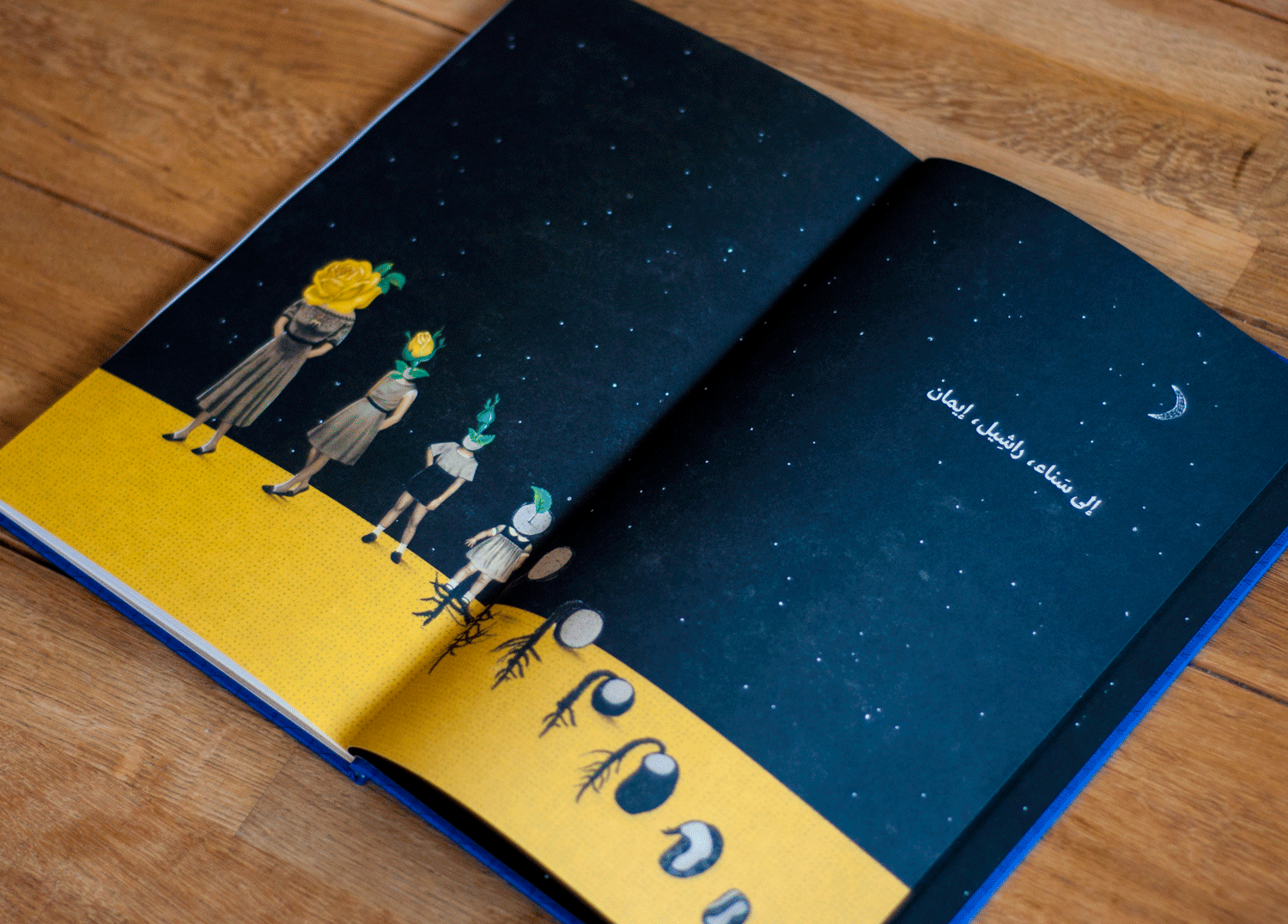
Spread from Hkeyeh w Adar (حكاية وآذار), written and illustrated by Hussein Nakhal and David Habchy, and published by Dar Onboz
In Lebanon, Nadine Touma, founder and director of Dār Onboz since 2006, followed one of the most unconventional aesthetic paths in Arabic children’s publishing. Her work moved beyond the standard picture book format, bringing books into dialogue with animation, music, performance, oral culture and object-making.
Dār Onboz holds a significant place in this history for the way it expanded the possibilities of the Arabic children’s book, moving it beyond the conventional picture book toward a sensory and poetic object shaped by image, sound, language, oral memory, performance and play. [11]
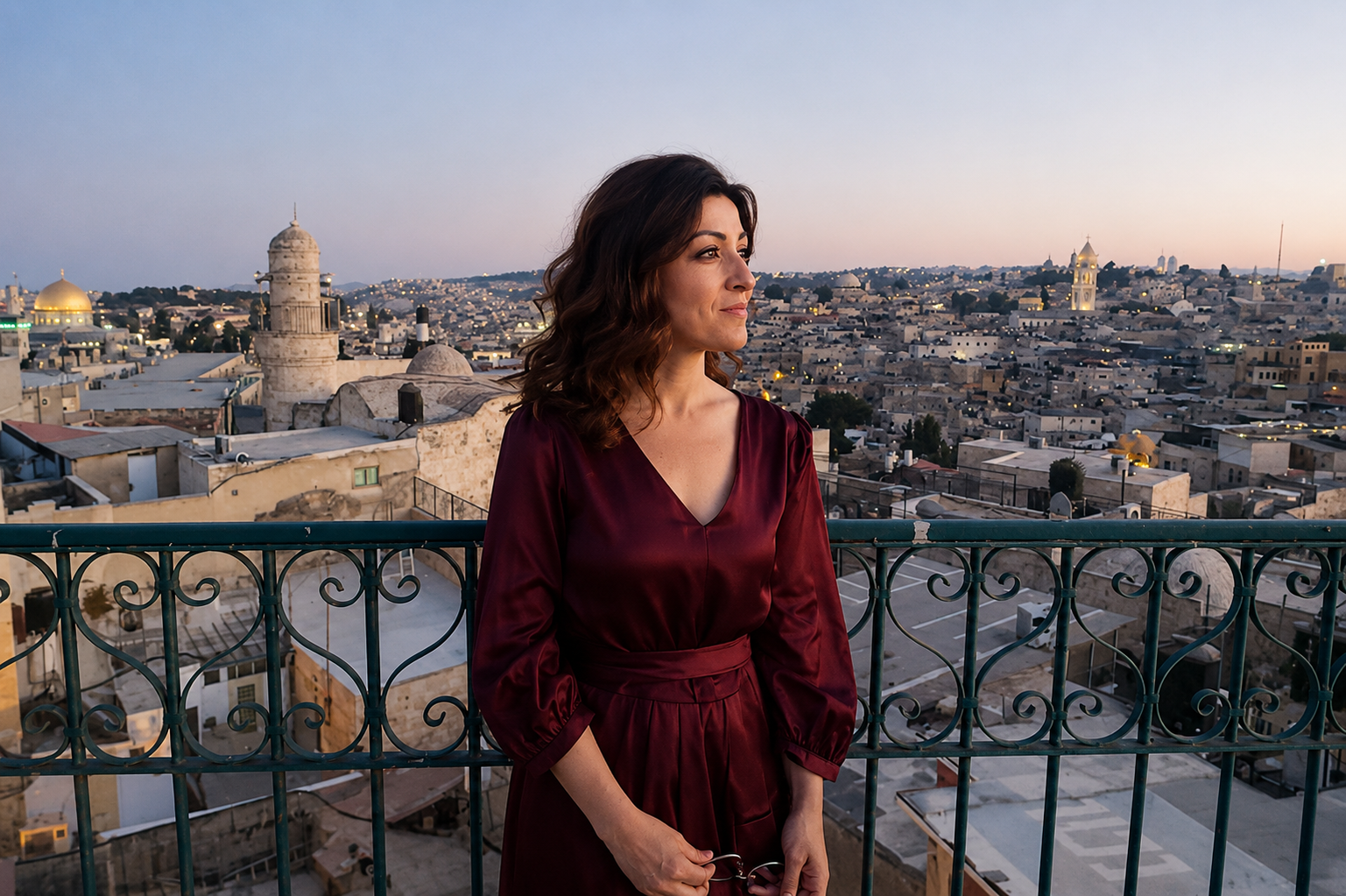
Maya Abu Al-Hayyat is a Palestinian novelist, poet, translator, and children’s author whose work explores identity, memory and belonging through the intimate textures of everyday life. Her writing resists simplified representations of Palestinians as either victims or heroes, making room instead for humour, love, anger, family tensions, displacement and contradiction.
In Ramallah, the Palestine Writing Workshop brings publishing, community reading and creative experimentation together. Founded in 2009, it publishes children’s books and literary resources while also bringing stories directly into schools, neighbourhoods, villages and refugee camps through readings, storytelling and workshops.
Directed by Maya Abu Al-Hayyat since 2013, the organisation works with writers, illustrators, teachers and children. Its books often explore new relationships between text and image, as well as calligraphy, play, participation and different ways of telling a story.
Crucially, the Palestine Writing Workshop does not separate publishing from reading and community life. A book can be a finished work, but also the beginning of a conversation, a workshop or a new story created by a child. Despite severe political and economic constraints, it continues to keep Palestinian stories in circulation while opening space for new voices, visual styles and narrative forms. [12]
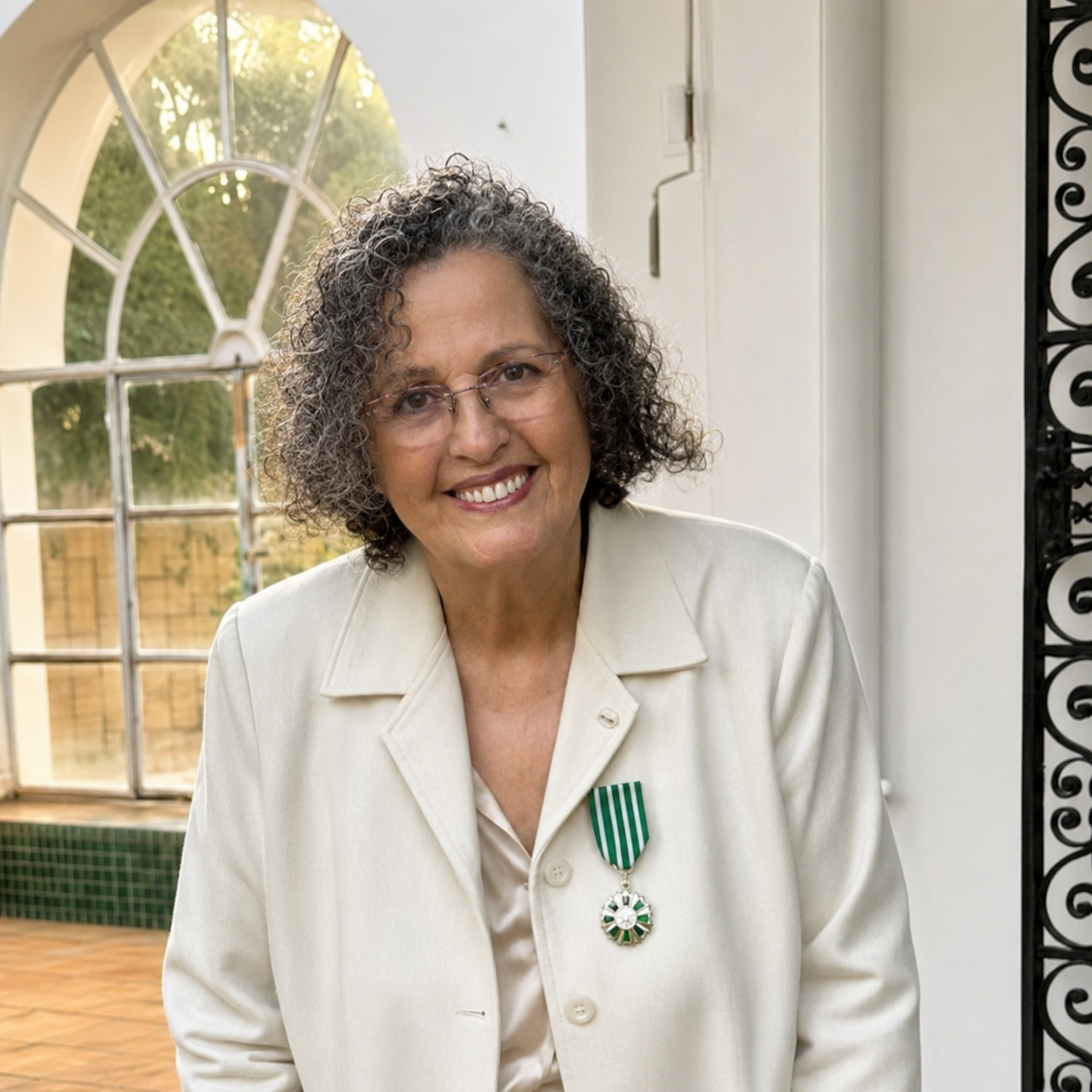
Amina Hachimi Alaoui, founder of Yanbow Al Kitab, named Chevalière de l’Ordre des Arts et des Lettres in 2025 for her contribution to promoting books and reading among young audiences in Morocco.
This connection between publishing, community reading and access to books also developed in Morocco through Yanbow Al Kitab. Founded in 2006 by Amina Hachimi Alaoui, the house created children’s books close to Moroccan cultural references and multilingual realities, while working to bring them to readers beyond the main urban centres.
Its visual openness is equally distinctive. While the stories remain rooted in Moroccan places, traditions and everyday life, Yanbow Al Kitab has collaborated with contemporary illustrators from across the Arab region, including the Lebanese illustrator Maya Fidawi. These collaborations bring together recognisable elements of Moroccan life and visual styles that can speak to readers across cultures.
Alya and the Three Cats, written by Amina Hachimi Alaoui and illustrated by Maya Fidawi, is a good example. First published in Arabic and French, the book later appeared in English, showing how a story grounded in a Moroccan setting can travel internationally through a clear and contemporary visual language.
Through affordable prices, reading campaigns and outreach programmes, Yanbow Al Kitab has also brought books to children in remote and underserved areas. Its 2024 Bologna Prize for Best Children’s Publishers of the Year for Africa recognised an approach in which publishing, visual creation and access to reading remain closely connected. [13]
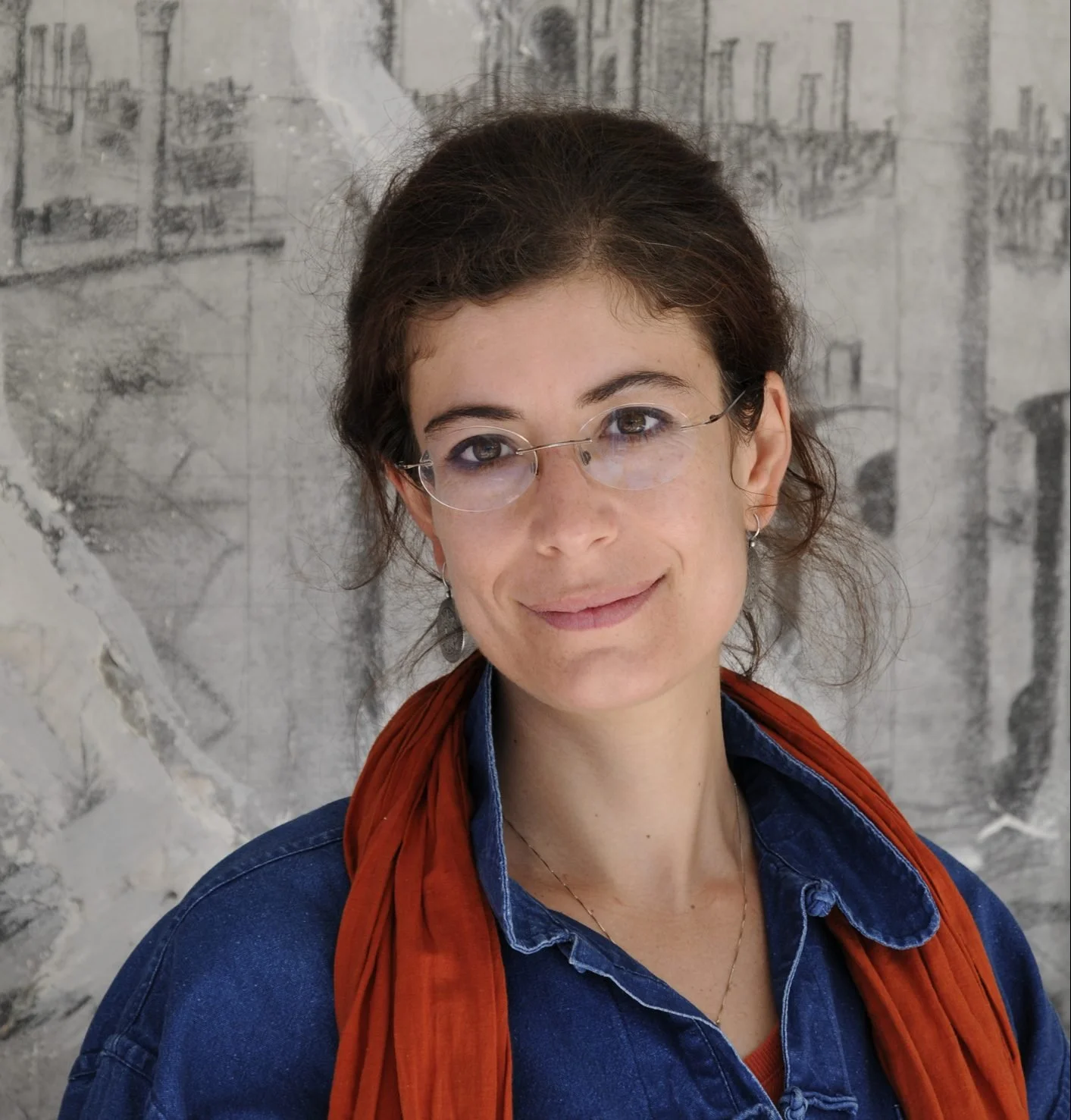
Selma Hellal, Algerian publisher and co-founder of Barzakh. While Barzakh is not primarily a children’s picture-book publisher, its illustrated editions of Mohammed Dib’s texts show how literary heritage can meet contemporary visual work, material quality and books made for younger readers.
In Algeria, Selma Hellal’s Éditions Barzakh enters this story through literary publishing rather than children’s publishing alone. Founded in Algiers in 2000 with Sofiane Hadjadj, Barzakh has played an important role in bringing Algerian voices back into circulation, republishing major writers and developing international co-editions with houses in France and beyond. Its illustrated projects around Mohammed Dib’s texts are especially relevant here: by pairing literary heritage with original illustrations, careful formats and strong editorial design, Barzakh shows how visual publishing can open new ways of transmitting Algerian literature to younger readers and wider audiences. [14]
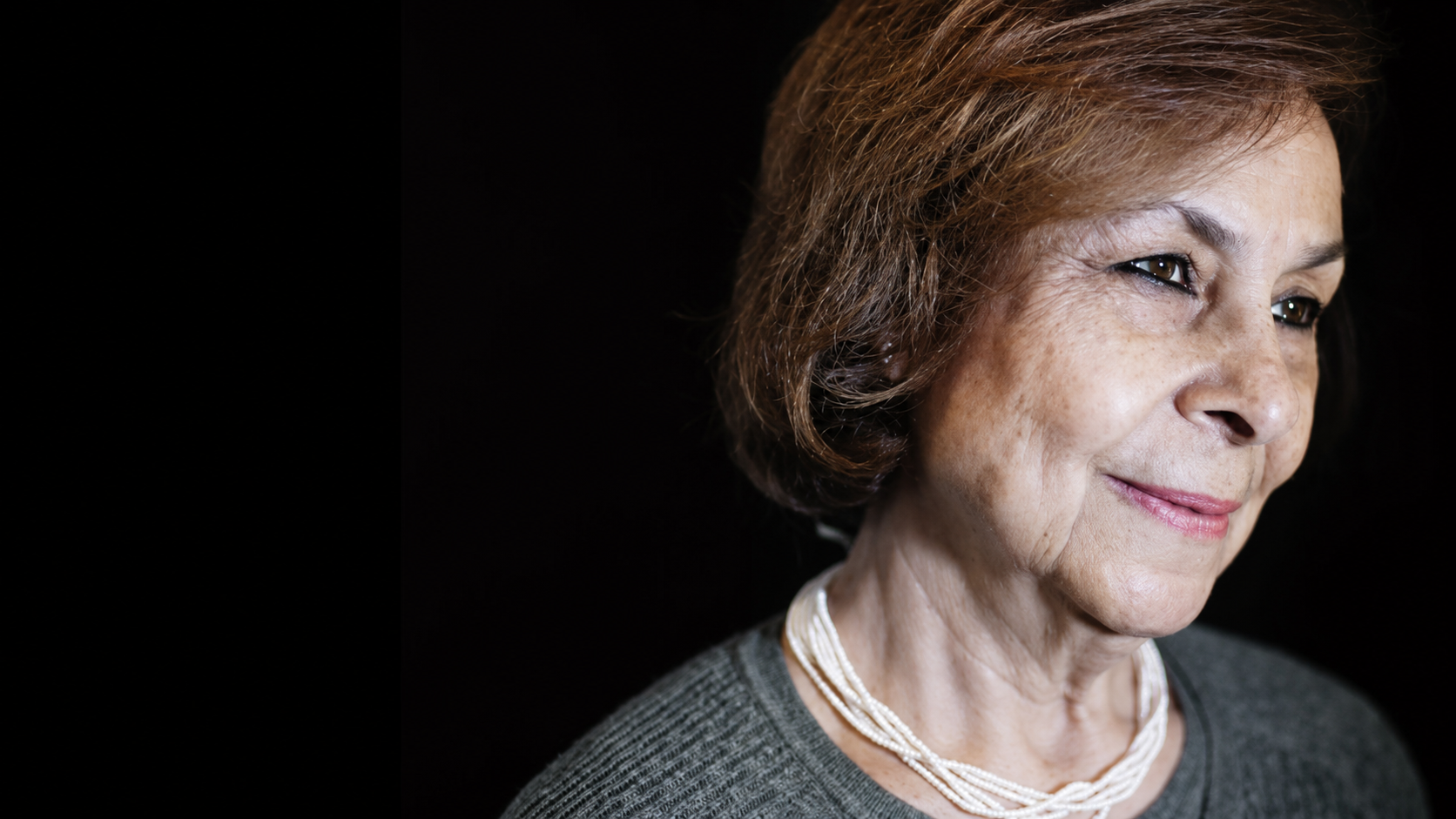
Born in Jordan and based in Sweden, Mona Henning Zureikat founded Dār Al-Muna in 1984 with the aim of bringing Swedish and Scandinavian literature to Arabic-speaking readers. Over the following decades, the house introduced Arab children to more than 130 translated titles, including books by Astrid Lindgren and Gunilla Bergström.
Beyond the Arab region, Dār Al-Muna, founded in Sweden by Mona Henning Zureikat, opened another route: translation and diaspora circulation. By bringing Scandinavian children’s literature into Arabic, the house helped create a bridge between languages and reading cultures. [15]
A region of many voices
This selection is not exhaustive, but it reveals the plurality of voices that already exists within the Arab region itself. These women have brought a wide range of themes, visual languages and approaches to childhood, memory, education, identity, disability, heritage and everyday life.
Despite major structural difficulties, these voices remain active. They continue to preserve, renew and expand the stories of the region, creating books that reflect very different childhoods, places and experiences.
The question today is no longer whether this creativity and vision exist. It is how these books, ideas and practices can circulate more freely between Arab countries, and how they can reach wider international audiences.
*Other countries in North Africa and the wider Arab region have their own histories of children’s writing, publishing and reading initiatives, some of which remain less documented in international sources. The figures discussed here are not meant to represent the whole field, but to trace some of the editorial paths through which Arabic children’s books gained new visibility and ambition.
Sources
[1] Mathilde Chèvre, Renaissance enfantine: La création arabe en littérature pour la jeunesse depuis 1967, reflet et projet des sociétés — Égypte, Liban, Syrie, doctoral thesis, Aix-Marseille University, 2013; and Le poussin n’est pas un chien: Quarante ans de création arabe en littérature pour la jeunesse, Iremam, 2015.
[2] Shorouk Kids and Shorouk News pages on Amira Abu al-Majd’s editorial role, publications and public discussions on children’s books.
[3] Nahdet Misr official materials on the history of the publishing house and Dalia Ibrahim’s leadership, together with the 2025 PublisHer Excellence Award announcement.
[4] Altibrah’s profile of Najla Nusayr Bashour, library records for My Friend and My Brother Is Different, and UNESCO material on the Prize for Children’s Literature in the Service of Tolerance.
[5] Dar Al-Hadaek’s official catalogue and institutional pages on Nabiha Mheidli, together with the Etisalat Award archive.
[6] Dar Asala’s official “About” material and IBBY profiles of Dr. Shereen Kreidieh, including her publishing work and international roles.
[7] Al Salwa’s official “About Us” page on Taghreed Najjar and Salwa Shakhshir, together with the Bologna Children’s Book Fair record for the 2026 BolognaRagazzi Award awarded to Who Am I?
[8] Ghalia Kadiri, “Nadia Essalmi, Pioneer of Children’s Publishing in Morocco,” The UNESCO Courier, 2024.
[9] Kalimat Group and Kalimat Foundation official material on Bodour Al Qasimi, together with International Publishers Association, WIPO Accessible Books Consortium and Bologna Children’s Book Fair records.
[10] Dar Al-Balsam official material and IBBY Europe, 100 Books for Children and Young People in Arabic, on the Arabic-Braille edition of The Very Hungry Caterpillar.
[11] Lebanese American University, “Who Is She in Lebanon” profile of Nadine Touma, together with Dar Onboz institutional material.
[12] Palestine Writing Workshop material on its reading and writing programmes; profiles of Maya Abu Al-Hayyat published by Milkweed Editions, the Academy of American Poets and the International Prize for Arabic Fiction.
[13] Bologna Children’s Book Fair records on Yanbow Al Kitab’s 2024 BOP Award, together with IBBY Morocco material on Amina Hachimi Alaoui and the house’s reading initiatives.
[14] International Alliance of Independent Publishers and Éditions Barzakh material on Selma Hellal, Sofiane Hadjadj and the founding of the house in Algiers in 2000.
[15] Dar Al-Muna’s official “About” page and Svensk Bokhandel, “Utmanar arabvärlden,” on Mona Henning Zureikat, translation and the circulation of Scandinavian literature in Arabic.
