
The Stories We Think We Know
If I ask someone to name a story associated with the Arab world, one answer comes up more than any other: Aladdin. But most people are not thinking of an old tale or of the storyteller who first brought it to the page. They are thinking of Disney.
I have returned to this question many times over the past three years. How did such a wide and varied body of stories come to be represented, for so many people, by the same few characters, usually encountered through Western adaptations?
Stories travel. They are translated, retold and changed by the people who carry them. One Thousand and One Nights is itself the result of stories moving between places, languages and generations.
The problem begins when one version becomes so dominant that an entire culture, past, present and future, is reduced to a single fixed image. How can we make more room for Arab storytelling traditions, not as relics of the past, but as living forms that continue to evolve and take part in the conversations of our time?
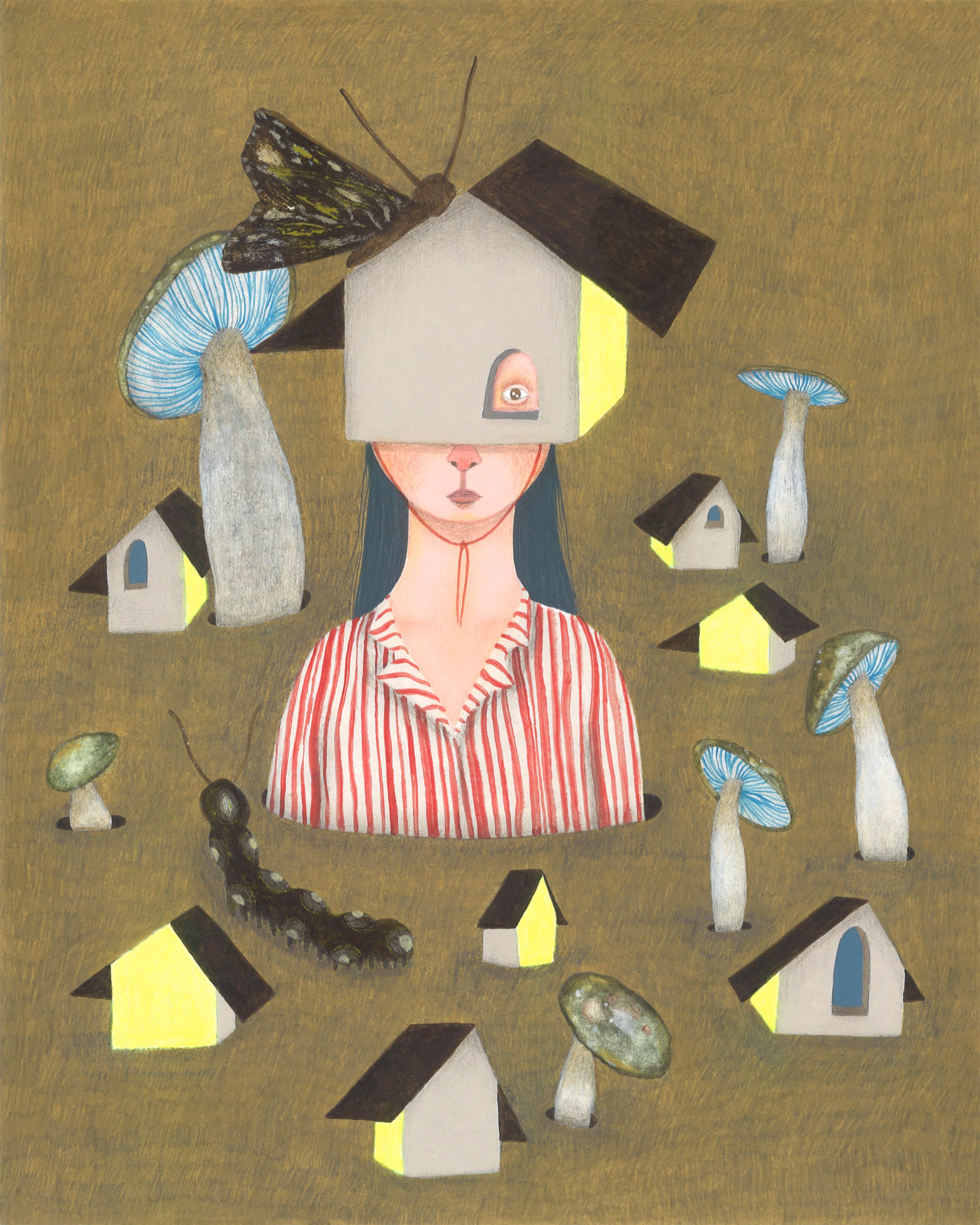
© Illustration by Haya Halaw.
Looking Again at Familiar Characters
Tamim Al-Barghouti on Shahrazade and the power of storytelling in One Thousand and One Nights. Video in Arabic.
The more I researched, the more I realised that the characters many of us associate with Disney come from narrative traditions far richer than their popular adaptations suggest.
Palestinian poet, writer and academic Tamim Al-Barghouti discusses this in his video ألف ليلة وليلة وفضائح الأجداد (One Thousand and One Nights and the Scandals of Our Ancestors). He looks at the complexity of these stories and at what has been overlooked or diluted in the versions most familiar to us.
Take Sinbad the Sailor, for example. One theory connects him to the Muslim Chinese admiral Zheng He, who commanded one of the most remarkable fleets in Chinese history. Although historians dispute this connection, the comparison points to the real maritime world behind these stories: a world of travel, trade and encounters across East Africa, Arabia and South Asia.
Between 1405 and 1433, Zheng He led seven major expeditions involving hundreds of ships and tens of thousands of crew members. Whether or not his voyages directly influenced the tales of Sinbad, they remind us that journeys of this scale were not simply the stuff of legend.
And what about Scheherazade? Is she simply a woman telling stories to save her own life from a violent king? Or could she be seen as a heroine as compelling as any Marvel character—one who uses intelligence and storytelling, rather than physical power, to stop a cycle of violence?
She leaves stories unfinished, creates suspense and weaves one narrative inside another. These techniques remain familiar in novels and television series today.
What Our Familiar Stories Leave Out
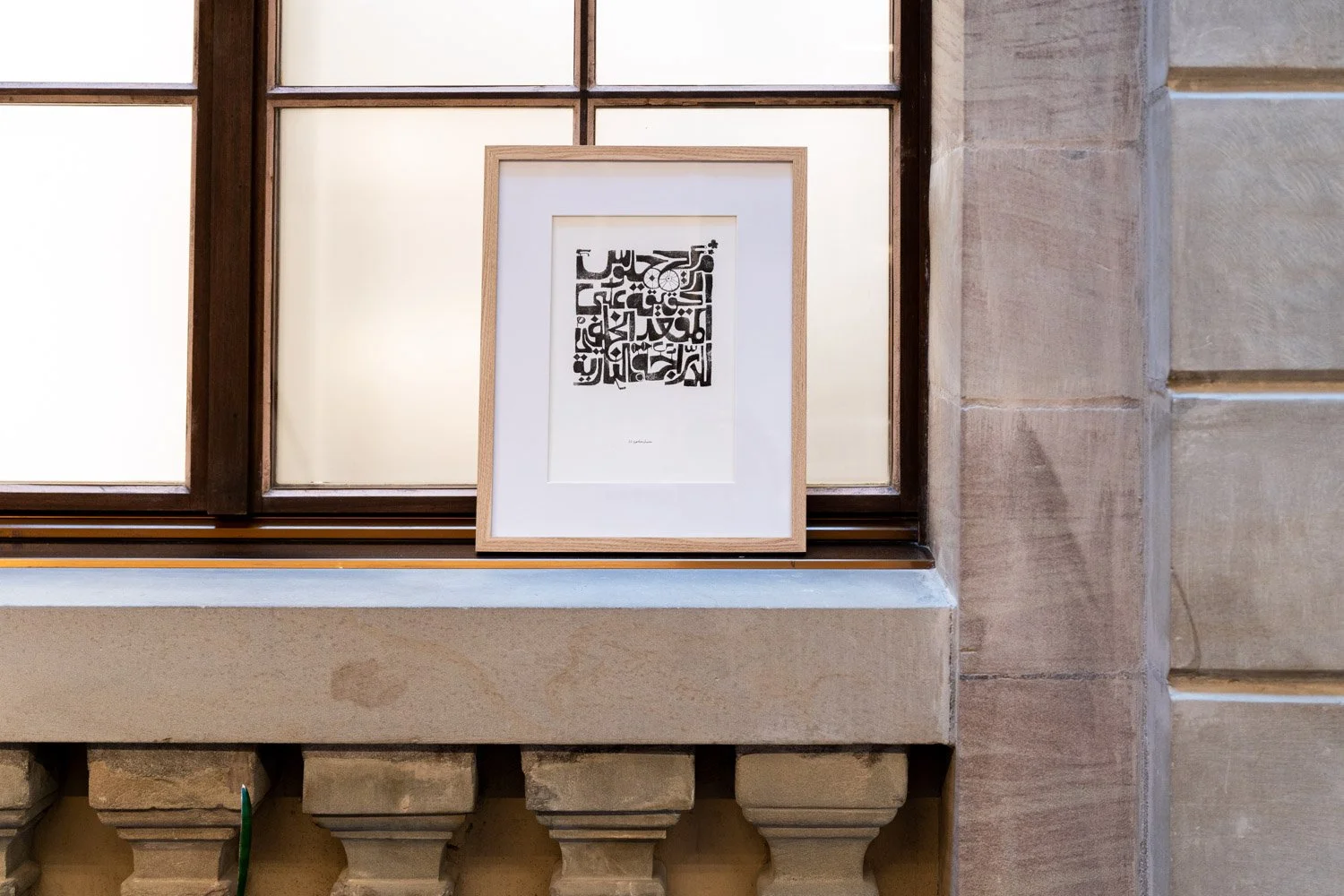
2024 Hassan Manasrah. From the exhibition, 2024.
Imagine a world where only one version is told until it becomes the only one anyone remembers. It may sound extreme, but perhaps we are not so far from it. Long before we visit a country or meet the people who live there, we often already have an idea of them through the books, films and characters we encountered as children.
When the same images return again and again, they can end up representing an entire culture—its past, its present and even its future.
To tell a story is also to pass on a memory, question a stereotype and invite someone into a world they may not know. This is why it matters which voices travel and which remain unseen. A book, a film or an illustration can cross a border before we do, offering another view of a place and a first point of contact between people who might otherwise know little about one another.
The Stories Never Stopped
The more I research, the more I realise that I am asking the wrong question. Arab storytelling is not something we need to bring back. It is already here.
It appears in many forms. We see it in Deena Mohamed’s Shubeik Lubeik, in the graphic novels and illustrated books of Lena Merhej and Zeina Abirached, in Hassan Manasrah’s illustrations and comics, and in Joe Hattab’s documentaries.
The same energy is visible at Cairo Comix, the Algiers International Comics Festival, Beirut Animation Nights and the Sharjah Exhibition for Children’s Book Illustrations. Each focuses on a different medium, but together they show how much is happening across comics, illustration, publishing, film and animation.
When I look at all this, I do not see a lack of creativity. I see artists, ideas and audiences that are still too often separated by borders, languages and publishing markets.
This is why these links matter. Because, above all, a story is a connection, , and every connection begins with an encounter.
