
Imagination and Morality in Children’s Picture Book
Imagination has always been part of children’s literature. What changes is how it is used, and how much space it leaves to the reader.
In the Arab world, this question takes a particular form. It is shaped by a different history, where stories have long been tied to transmission, education, and the preservation of cultural memory.
Looking at this trajectory helps understand how imagination is framed today, and what place it is given within contemporary picture books.
Before children’s books
Before children’s literature existed as a separate category, stories were shared across all ages. They circulated orally within communities and formed part of a collective experience.
Myths, fables, and folk tales were not simplified for children. They carried symbolic meanings, moral tensions, and complex worlds. Children encountered them through listening, repetition, and memory.
Texts such as The Epic of Gilgamesh, the Panchatantra, and Kalila wa Dimna belong to this tradition. They show how imagination, knowledge, and values were embedded in the same narrative space.
Stories did not explain the world step by step. They allowed people to engage with it through images, symbols, and situations that could be understood in different ways.
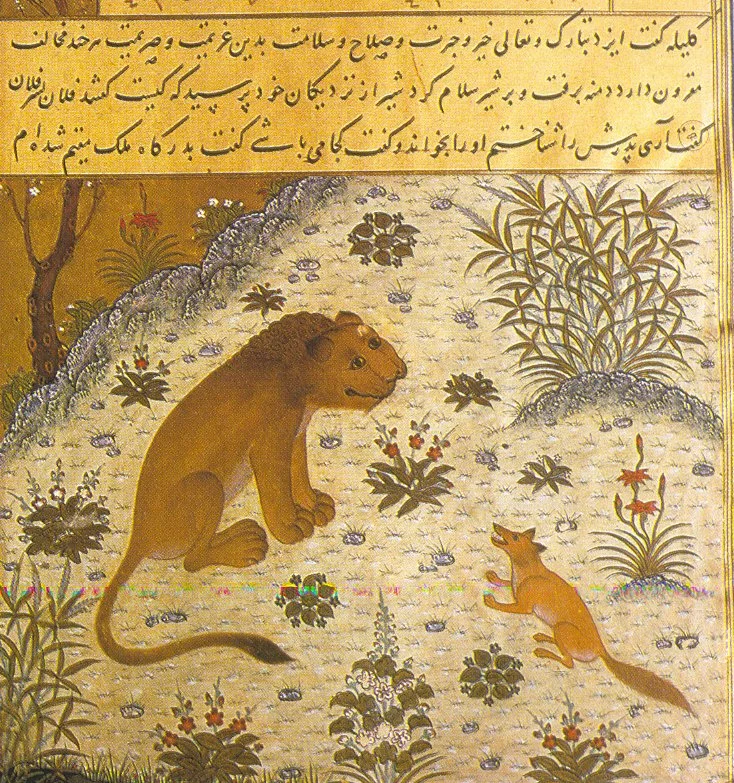
A page from Kelileh o Demneh depicts the jackal-vizier Damanaka ('Victor')/ Dimna trying to persuade his lion-king that the honest bull-courtier, Shatraba(شطربة), is a traitor.
Children were not the primary addressees of these narratives. Nevertheless, they were deeply immersed in them. Through repeated listening, they absorbed symbolic worlds in which imagination, and explanations of the world were inseparable.
When Stories Became Educational Tools
As writing practices developed and childhood began to be defined as a distinct stage of life, the function of stories changed. Narratives addressed to children increasingly carried clear educational and moral intentions. The fables attributed to Aesop, as well as Kalila wa Dimna in the Islamic world, illustrate this shift. Originally composed for adult audiences, often rulers or future rulers, these stories were later adapted for pedagogical use.
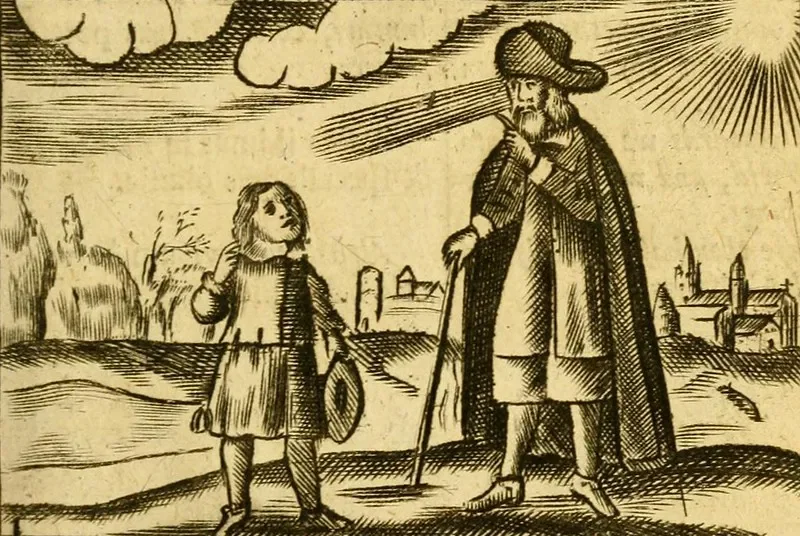
opening illustration of Master and Child, from the 1705 English edition of Orbis Sensualium Pictus. Source
This becomes particularly clear in the seventeenth century. John Comenius’ Orbis Sensualium Pictus, often described as the first illustrated children’s book, presents the world as something ordered and readable. Words and images work together to name, classify, and organize knowledge so that learning can proceed step by step.
Imagination remains present, but its role changes. Images no longer open ambiguous symbolic worlds. They support recognition and understanding. Stories guide the reader through a world that has already been organized.
The case of Lewis Carroll and a New Use of Imagination
Early European fairy tales, including those collected by Charles Perrault and the Brothers Grimm, are structured around clear consequences. Actions lead to reward or punishment, and imagination reinforces this structure by making it visible and understandable. It does not unsettle meaning. It supports it.
During the nineteenth century, a different use of imagination begins to emerge, particularly in Alice’s Adventures in Wonderland. In Lewis Carroll’s story, logic shifts, language becomes unstable, and authority no longer holds in the same way. The narrative does not guide the reader toward a fixed conclusion, and meaning is not delivered in advance. It takes shape through the reader’s experience, as they move through confusion, contradiction, and play without being brought back to a clear lesson.
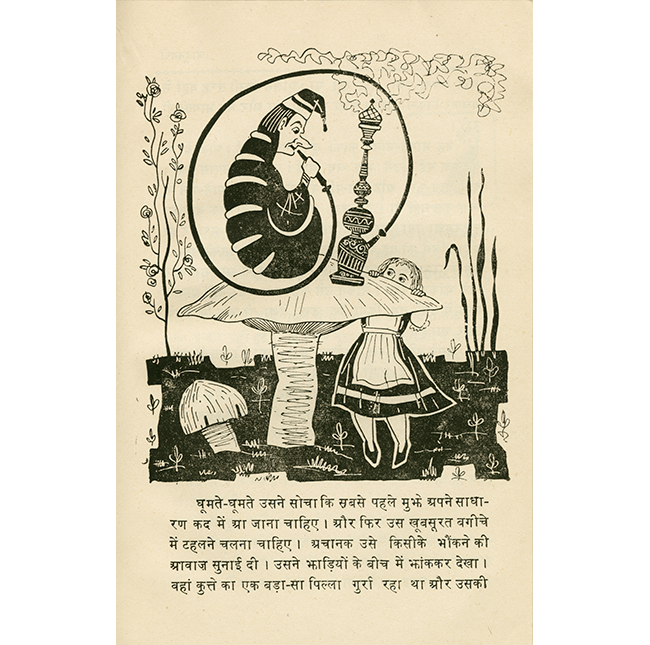
Alice’s Adventures in Wonderland. Translated into Hindi by Shreekant Vyas. Delhi: Shiksha Bharati, 1979. Source
Rather than delivering meaning through explicit moral statements, the story leaves space for interpretation. Moral questions and values do not disappear, but they are no longer spelled out. They remain present without being resolved in a single direction.
Imagination, in this context, does not oppose logic, or morality. It changes how they operate within the story. Instead of guiding the reader toward a defined conclusion, it creates a space in which meaning can take shape through questioning, and connection.
What about the Children’s Literature in the Arab World
The development of modern children’s literature in the Arab world followed a specific historical path. It took shape mainly in the late nineteenth and early twentieth centuries, during a period marked by educational reform, language standardization, and broader projects of cultural renewal often associated with the Nahda. At that time, books for children were closely tied to questions of transmission: how to teach, and how to contribute to the formation of a modern society.
Early children’s texts were therefore strongly connected to moral, social, and cultural objectives. Stories were expected to instruct as much as to engage. Imagination was present, but it remained framed. It supported clarity and the transmission of shared values, rather than opening space for multiple interpretations.
This reflects a specific historical context. These choices were not limitations, but responses to concrete needs. Literature was shaped by the role it was expected to play within society.
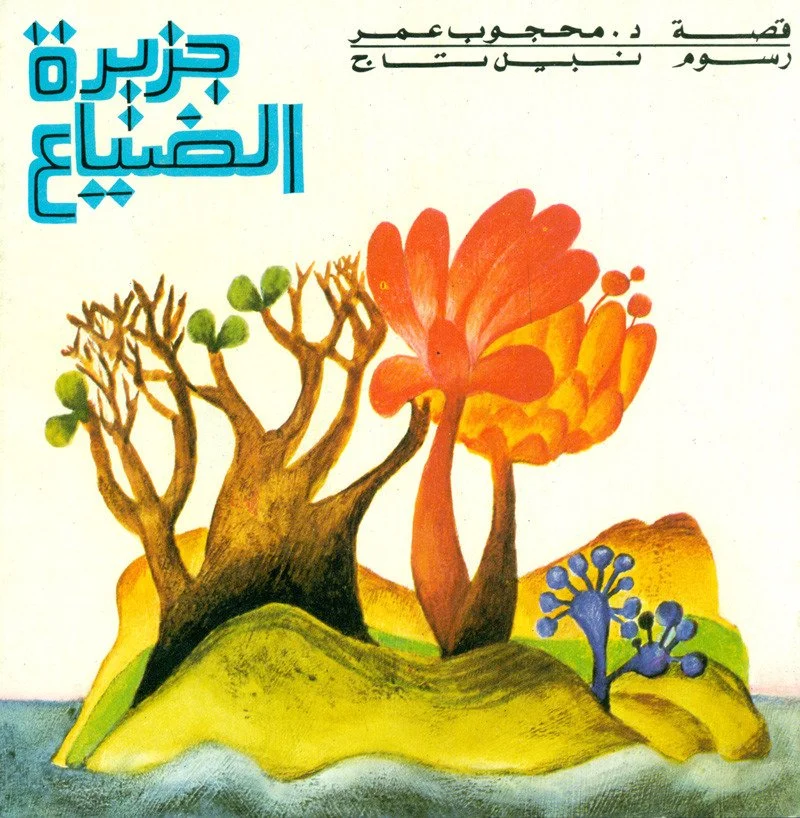
Island of Loss by Mahjoub Omar, illus. Nabil Taj. Source
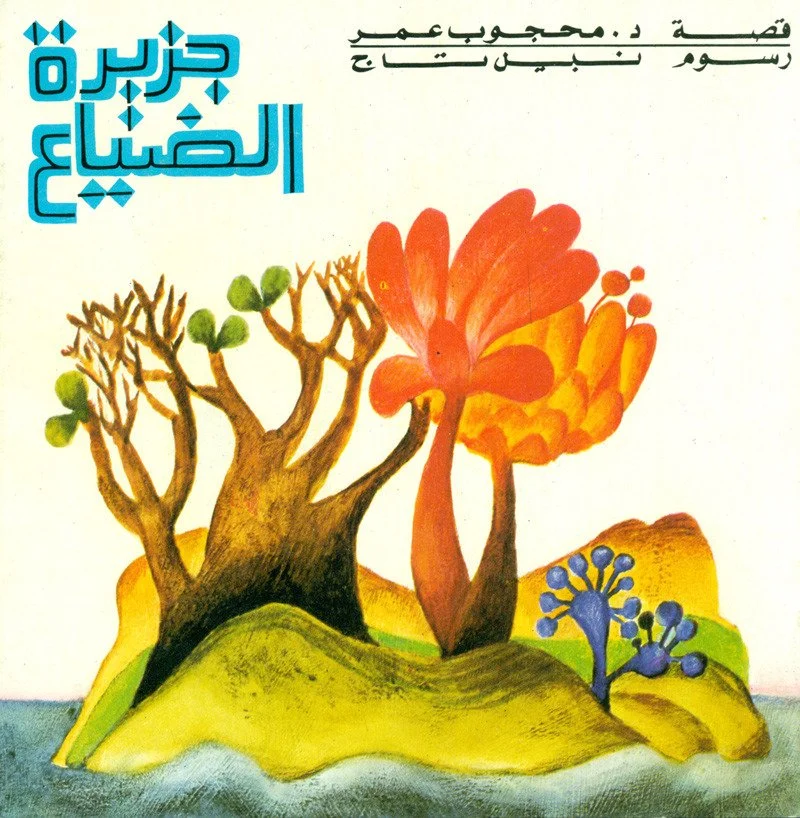
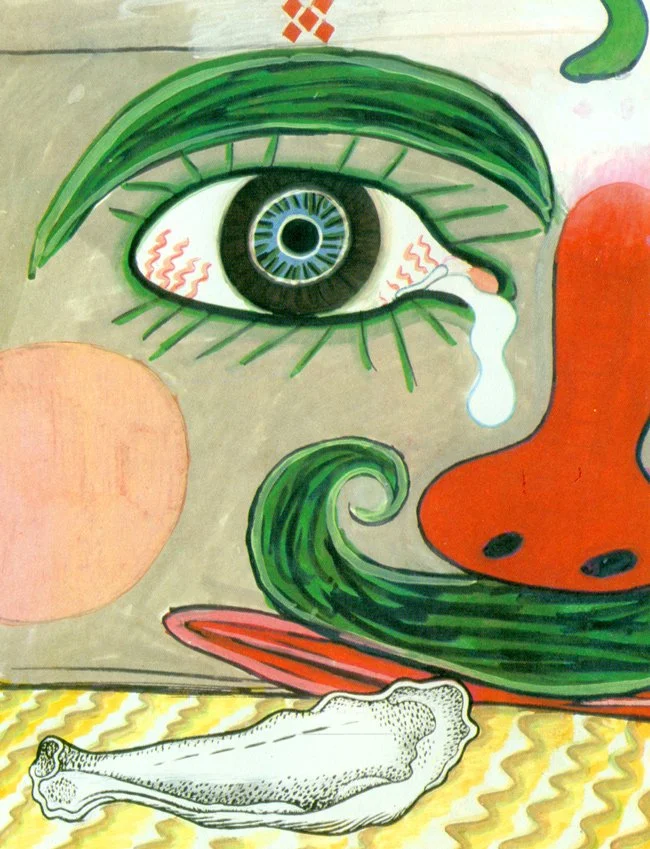
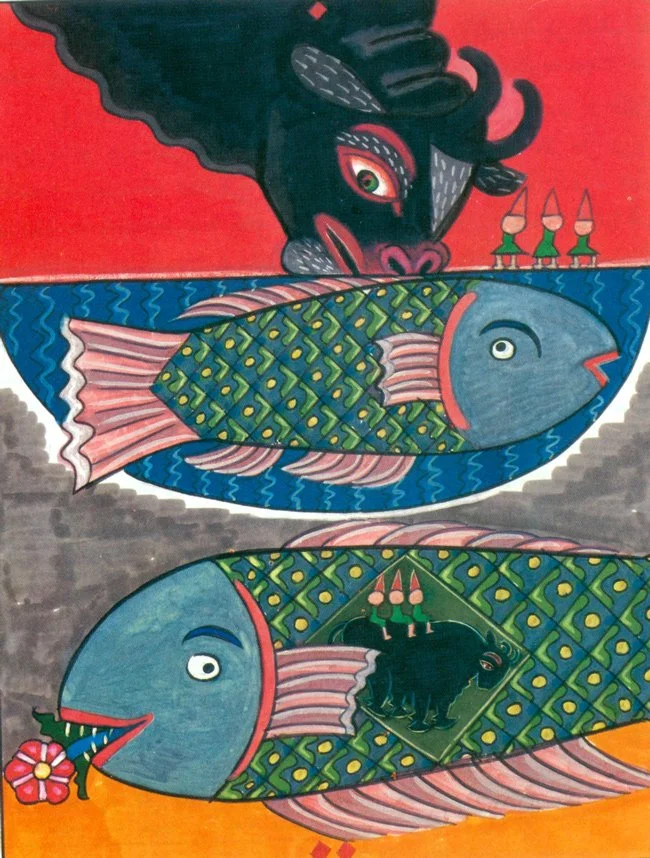
Contemporary picture books in the Arab world
Nowadays, contemporary children’s picture books in the Arab world have undergone important changes in recent years. Illustration styles have diversified, formats have expanded, and many authors and illustrators are developing new ways of telling stories. This evolution is not only visible in form. It also appears in the themes being addressed, with more space given to questions of identity, social change, and lived realities that were previously less present or more cautiously approached. Stories are no longer limited to familiar narrative frameworks. They are beginning to engage more directly with the environments in which they are produced.
At the same time, a certain continuity remains in how these stories are constructed. Many books still place a strong emphasis on clarity. Meaning is guided closely, and the relationship between text and image tends to remain direct. Illustrations often reinforce what is already stated, ensuring that the story is understood in a precise way. The reader is accompanied throughout, with little left unresolved.
This approach cannot be separated from the context in which these books exist. Across many parts of the region, storytelling is closely tied to questions of memory and transmission. In situations marked by conflict, displacement, or political pressure, stories often carry the responsibility of preserving fragments of experience, language, and cultural reference. They are not only narrative forms. They are also ways of holding on to what might otherwise disappear.
Within this context, the need for clarity becomes understandable. Stories are shaped to be accessible, to be shared, and to be retained. Leaving too much open can feel uncertain when what is being transmitted is already fragile.
At the same time, children’s literature is also a space where other forms of experience can take place. It allows for exploration, for moments that are not fully explained, and for ways of engaging with the world that do not follow a fixed path. This dimension is part of how children build their relationship to language, to images, and to meaning.
This creates a tension that runs through many contemporary works. The need to preserve and transmit does not operate in the same way as the need to open space for imagination. One tends to stabilize meaning, while the other allows it to shift and expand.
The question is not to choose between these two movements. Both are present, and both respond to real needs. What matters is how they are held together within the story, and how much space remains available for the reader.
children’s picture books, imagination in children’s literature, Arab children’s literature, morality and education, visual storytelling, reader interpretation
